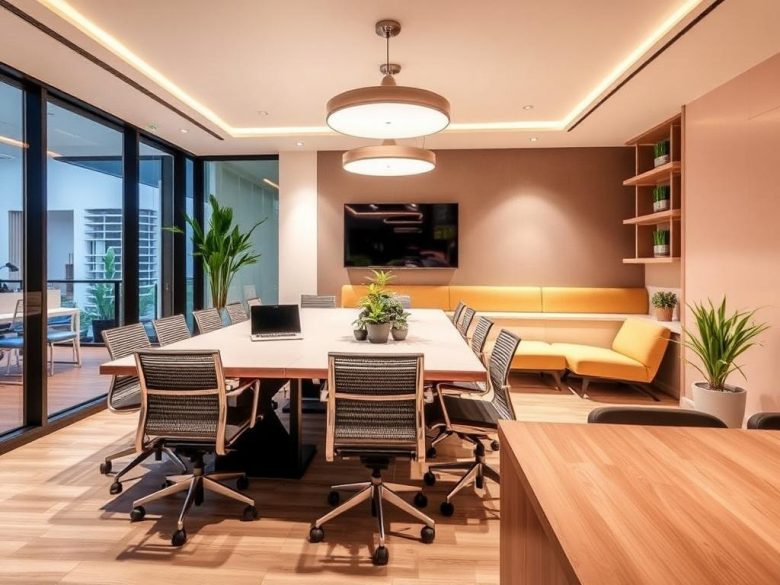
Understanding the Office Landscape in Cyprus
Cyprus has in recent years become an increasingly attractive destination for businesses, startups, and freelancers seeking a dynamic work environment that combines a favorable business climate with high quality of life. This has led to a growing divergence in how office spaces are perceived and utilized. Two predominant models emerge: the traditional office and the shared workspace. Both represent distinct types of real estate investments with their own sets of risks and rewards.
The traditional office investment Cyprus market remains rooted in leasing or buying dedicated office units—custom-tailored spaces owned or rented to single tenants. These spaces prioritize control and permanence but often come with significant financial and operational commitments. Conversely, shared workspaces or coworking spaces emphasize flexibility, community, and scalability. These spaces can incorporate hot-desk options, dedicated desks, private offices, and common amenities, attracting a broad demographic ranging from freelancers to SMEs.
To engage with the office market wisely in Cyprus, one must consider current coworking space Cyprus statistics and analyze flex workspace demand Cyprus trends that speak to evolving workspace needs. Meanwhile, traditional offices appeal due to their perceived stability and established tenant bases. This article will dissect the investment pros and cons of both options, helping investors and tenants alike navigate this complex decision.
Coworking spaces are rapidly reshaping how work is approached in Cyprus, reflecting a significant shift in business culture and office utilization.
The Evolution and Appeal of Shared Workspaces in Cyprus
Shared workspaces in Cyprus have grown substantially over the past decade, fueled by global digitalization, the rise of remote working, and the island’s appeal as a business hub within Europe and the Mediterranean region. Coworking space Cyprus statistics from recent years reveal an annual growth rate exceeding 10%, underscoring a thriving sector that caters to startups, digital nomads, consultancy firms, and even branches of multinational corporations.
One of the primary drivers is the diversification of demand. The hot-desk market Cyprus segment, in particular, has expanded sharply as freelancers and remote workers seek flexible hot-desk options over fixed, costly offices. This trend parallels the broader global phenomenon where the traditional 9-to-5 office model is increasingly questioned.
Shared office ROI benefits many investors, especially those who position their properties to offer tiered memberships, scalability, and event-hosting capabilities. The demand for flexible leases and smaller commitments means coworking spaces are occupied more consistently throughout the year compared to vacant traditional offices during downturns. Shared spaces foster community interaction, knowledge sharing, and networking, which is attractive not just for tenants but also for service providers and investors looking for higher long-term yields.
Given Cyprus’s rising profile as a startup-friendly environment, the growth of shared workspaces aligns closely with government initiatives and international tech firms venturing into the market. Investors in shared offices often find themselves catering to a younger, tech-savvy clientele that values networking facilities, communal resources, and ease of access more than rigid structural setups.
The flexibility and community offered by shared workspaces position them as a preferred choice for emerging businesses and freelancers in Cyprus.
Cost Structure and Operational Efficiency of Shared Workspaces
Investors gravitate towards shared workspaces for their ability to optimize operational costs and maximize revenue per square meter. Unlike traditional office leases which often include fixed rental agreements, coworking spaces utilize variable pricing that adapts to tenant needs—hot-desks, private rooms, meeting rooms, and day passes.
This fragmentation allows operators to attract a wider customer base and reduce vacancy risk. For example, a hot-desk market Cyprus update shows that businesses primarily interested in short-term engagement or project-based work prefer paying only for the time and amenities utilized rather than a long-term lease.
Operational efficiency also stems from shared services—cleaning, internet, utilities, and security—which are centralized and scaled. This reduces individual costs and, importantly, enhances overall tenant satisfaction. Maintenance intervals are streamlined, and community managers ensure the smooth running of day-to-day activities, creating a seamless user experience.
Flexible lease terms significantly appeal to tenants during economic fluctuations, especially in a small market like Cyprus where international economic shifts can cause rapid business adjustments. It translates into more predictable revenue streams for shared workspace investors, albeit at potentially lower margins per workspace unit compared to traditional offices.
Investment Dynamics and Stability of Traditional Offices in Cyprus
Traditional office investment Cyprus transactions form a substantial segment of the commercial real estate market on the island. These investments generally involve longer lease terms, established tenants, and contractual obligations offering income predictability. Such offices appeal to established firms, financial institutions, law firms, and government offices that value stability, security, and customization.
Often located in key business districts, traditional offices command respected addresses and prestige—qualities highly desirable for some sectors. Investors benefit from the ability to underwrite leases with long-term contracts, which can run for five to ten years or longer, providing steady cash flow with lower tenant turnover risks.
However, these advantages come with notable drawbacks. Capital expenditures for outfitting and maintaining traditional offices are significantly higher, and flexibility is limited. Businesses that expand or contract need to renegotiate or relocate, leading to vacancy periods and expensive tenant-finding processes. These challenges have become more pronounced in Cyprus due to evolving business models emphasizing agility over permanence.
Furthermore, the traditional office market is more sensitive to broader economic cycles. During downturns, demand for large-scale traditional office spaces can shrink considerably, increasing vacancy rates and reducing rental yields.
Traditional offices represent a stable but less adaptable form of real estate investment in Cyprus, catering to businesses seeking predictability over flexibility.
Cost and Risk Factors in Traditional Office Investments
Investors must consider upfront and ongoing costs for traditional office setups, including lease commitments, office furniture, IT infrastructure, maintenance, and property management. Tenant-specific customization usually means higher installation and refurbishment costs, which can be recouped only through lengthy leases.
Risk mitigation strategies often involve attracting anchor tenants with secure financial standings, yet this limits the tenant pool significantly. Vacancy periods create cash flow interruptions, and in a small market like Cyprus, finding replacement tenants quickly is not always feasible.
The traditional office investment Cyprus sector has been bolstered by laws protecting tenant rights and enforcing lease commitments. However, these protections can sometimes pose challenges for landlords attempting to renegotiate terms or exit leases, restricting flexibility from an investment perspective.
Additionally, in comparison with coworking spaces, traditional offices have slower adaptation times when responding to shifting market trends such as the increasing need for hybrid working models or the escalating use of technology-driven spaces.
Comparing Shared Workspace ROI and Traditional Office Returns
The decision between investing in shared workspaces or traditional offices often hinges on a detailed understanding of returns on investment (ROI). Shared office ROI in Cyprus typically involves analyzing occupancy rates, membership tiers, and ancillary revenue streams such as event hosting, F&B services, and premium access offerings.
Shared workspaces aim for higher turnover values, meaning more users generating revenue per square meter per month compared to a single tenant paying a fixed rent. This is especially important in markets like Cyprus, where flex workspace demand Cyprus data shows a pronounced tilt towards short-term commitments and flexible office hours.
Traditional offices typically provide lower risk but potentially flatter returns. Long-term leases guarantee steady income but may limit upside potential tied to rental market appreciation or operational efficiencies. Vacancy can severely depress returns, making tenant selection and contract structure critical.
| Investment Parameter | Shared Workspaces | Traditional Offices |
|---|---|---|
| Lease Term Flexibility | High – daily to monthly terms | Low – typically 3-10 years |
| Vacancy Risk | Moderate – diversified tenant pool | High – dependent on anchor tenants |
| Income Stability | Variable – based on occupancy | Stable – fixed lease contracts |
| Capital Expenditure | Moderate – fit-out for flexible use | High – tailored to specific tenants |
| Market Adaptability | High – easily adjusted offerings | Low – fixed layout and use |
These differences reveal the core investment trade-offs. Investors who prioritize steady cash flow and lower operational complexity may lean toward traditional offices, while those targeting growth, flexibility, and innovation might prefer shared workspaces.
Shared workspaces offer dynamic ROI opportunities in Cyprus, reflecting evolving work patterns, but require proactive management to capitalize on market trends.
Flex Workspace Demand and Market Growth in Cyprus
Industry reports and coworking space Cyprus statistics underscore strong demand growth for flexible workspace solutions. This surge is particularly evident in urban centers such as Nicosia, Limassol, and Larnaca, where the concentration of tech firms, consultancies, and international service providers grows steadily.
The pandemic accelerated hybrid working models, making flex workspace demand Cyprus figures explode upwards. Businesses seek to reduce fixed costs and provide employees with choice in workspace without sacrificing productivity. Similarly, the hot-desk market Cyprus segment has matured as users gravitate toward cost-effective, well-equipped locations offering a combination of privacy and collaboration.
This trend not only increases occupancy rates in shared spaces but also drives ancillary services growth—virtual offices, mail handling, business lounges, and corporate events. Investors in these spaces find opportunities in cross-selling and enriching tenant experiences, which can boost long-term profitability.
The continuous inflow of international firms setting regional headquarters in Cyprus strengthens the overall office market. The shared workspace model specifically caters to start-ups and satellite teams within these firms, proving its essential niche in the island’s evolving economic landscape.
Community and Networking: Intangible Yet Valuable Benefits in Shared Workspaces
One of the less quantifiable yet immensely beneficial aspects of shared workspaces is the community they foster. Many businesses, especially startups and freelancers, prioritize the social and networking opportunities these environments create. In Cyprus’s close-knit business communities, shared offices serve as incubators for collaboration, mentorship, and partnership building.
Traditional offices typically lack these dynamic social structures. Their physical separation and privacy often reduce cross-tenant interaction. For companies that value innovation and rapid growth, these connections can become valuable business assets, making shared spaces attractive beyond pure cost and functionality considerations.
This cultural aspect also supports investor interests. Spaces that cultivate vibrant, engaged communities tend to sustain higher occupancy rates and reduce churn. Community events, workshops, and industry meetups phrase the space not just as a facility but as a critical business ecosystem.
Shared workspaces in Cyprus double as innovation hubs, creating a culture that enhances both business growth and investor returns.
Future Trends: What Investors Should Watch in Cyprus
The commercial real estate trends in Cyprus suggest that hybrid models will dominate the office market future. Existing office spaces are being converted or designed to accommodate flexible desk arrangements, blending private offices with coworking areas. This flexibility allows landlords to optimize space usage according to evolving tenant needs.
Moreover, sustainability and smart building technologies are gaining importance. Investors who integrate energy-efficient systems, ergonomic designs, and digital infrastructure stand to attract premium tenants demanding comfort, cost efficiency, and corporate responsibility.
Offering hybrid options—such as flexible leases within traditionally rented buildings—could merge the best of both worlds, capturing demand from traditional businesses while accommodating the expanding flex workspace demand Cyprus sector.
Finally, the hot-desk market Cyprus segment is poised to grow with increasing remote working adoption, digital transformation, and Cyprus’s strategic geographic position. Investors who anticipate and tailor offerings specifically toward this segment may gain early mover advantages.
The Smart Investor’s Guide to Choosing Between Shared Workspaces and Traditional Offices
Deciding between shared workspaces and traditional offices as investment vehicles in Cyprus ultimately comes down to a nuanced assessment of market realities, tenant profiles, and financial goals. Shared workspaces cater to emerging market demands for agility, community, and lower upfront costs, while traditional offices offer predictability and stability favored by established firms.
Key considerations include:
- Tenant type and lease duration preferences
- Local market demand, supported by coworking space Cyprus statistics and flex workspace demand Cyprus trends
- Capital expenditure capabilities and willingness to adopt innovative management models
- Location relevance, particularly proximity to business hubs and technological infrastructure
- Risk tolerance relative to vacancy and market fluctuations
Investors should conduct deep feasibility studies, balance cash flow expectations, and be prepared for evolving market dynamics. Combining data on the hot-desk market Cyprus segment with wider economic indicators enables smarter, forward-looking decisions.
The choice between shared spaces and traditional offices requires aligning investment strategy with Cyprus’s unique and rapidly evolving commercial real estate market.
Rethinking Office Investment: Seizing Cyprus’s Opportunities
The transformation of the work environment across Cyprus is reshaping the commercial real estate landscape fundamentally. Shared workspaces have rapidly matured from niche concepts to major market players driven by technology, evolving corporate cultures, and the island’s strategic position. The hot-desk market Cyprus trend alone signals a broader shift toward flexibility and networking, favoring investor models that anticipate diverse tenant needs.
On the other hand, traditional offices maintain crucial relevance for sectors demanding control, privacy, and long-term tenancy security. The enduring appeal of these spaces in Cyprus reflects economic stability and business confidence among established companies, making such investments viable for risk-averse investors.
Understanding these differences and synergies is critical. Savvy market participants must closely track flex workspace demand Cyprus indicators alongside traditional office investment Cyprus performance metrics. This dual perspective enables more informed, strategic, and profitable investments aligned with current realities and future trajectories.
Ultimately, Cyprus’s growing office market presents exciting opportunities for investors willing to adapt and innovate, balancing the stability of traditional offices with the dynamism of shared workspaces. It is a pivotal moment for decision-making that will shape the island’s economic landscape for years to come.
Frequently Asked Questions
- What are the main drivers of demand for shared workspaces in Cyprus?
Flexible working trends, increasing number of startups, and digital nomads fuel shared workspace demand in Cyprus. - How does the ROI of shared workspaces compare to traditional offices in Cyprus?
Shared workspaces offer potentially higher ROI through diversified tenancy but come with variable income, while traditional offices provide stable but often lower returns. - Is the hot-desk market growing significantly in Cyprus?
Yes, the hot-desk market Cyprus segment has expanded rapidly, reflecting a rise in freelancers and remote workers seeking flexible options. - What risks does investing in traditional offices involve in Cyprus?
Risks include vacancies during economic downturns, high capital costs, and limited adaptability to changing tenant needs. - Can shared workspaces in Cyprus accommodate large corporate tenants?
Yes, many shared workspaces offer private offices and scalable solutions suitable for SMEs and corporate satellite teams. - How important is location for office investments in Cyprus?
Location near business hubs and transport links significantly impacts occupancy rates for both shared and traditional offices. - Are flexible lease terms more common in shared workspaces?
Yes, shared workspaces typically provide daily, weekly, or monthly lease options, unlike traditional offices with multi-year contracts.